Introduction
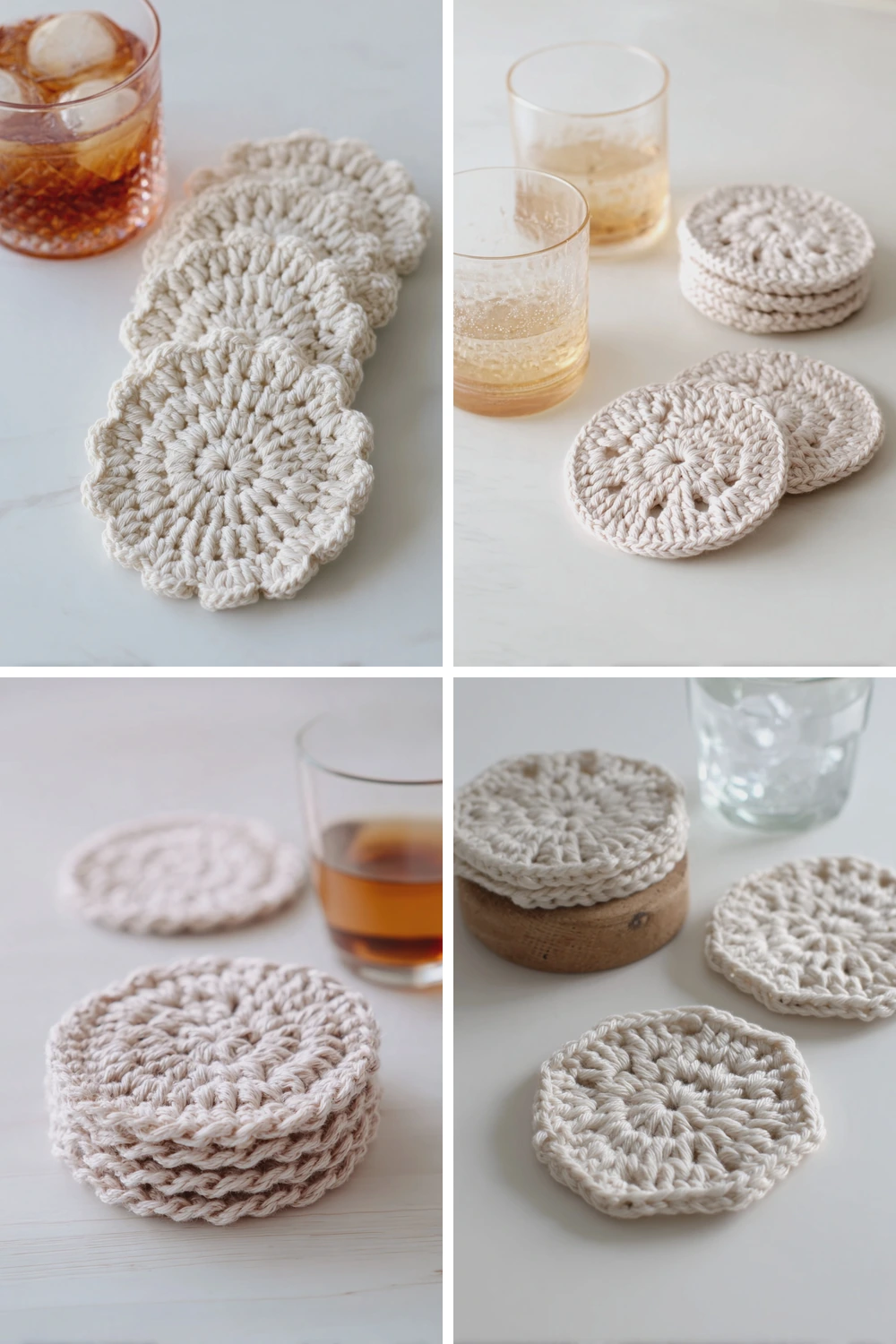
Crochet coasters are not only a fun and practical project for novices, but they also enhance your home decor and make thoughtful gifts. In this detailed guide, we will explore some straightforward crochet coaster patterns tailored for beginners. We will discuss essential stitches, techniques, and helpful tips to set you on the right path in your crochet journey with confidence and creativity.
What You Need to Start
Before you dive into crocheting, gather the following essential supplies:
1. Yarn: Choose a medium-weight cotton yarn, as it offers durability and absorbency, making it ideal for coasters.
2. Crochet Hook: A size H/8 (5 mm) hook is recommended for beginners.
3. Scissors: Necessary for trimming your yarn.
4. Tapestry Needle: Important for weaving in loose ends after completing your project.
5. Measuring Tape: Useful for checking your gauge, ensuring uniformity in your coasters.
Basic Stitches for Coasters
Here are six fundamental crochet stitches that are perfect for creating coasters:
1. Chain Stitch (ch)
What it is: The basis of most crochet projects.
How to work it:
1. Create a slip knot on your hook.
2. Yarn over (yo) and pull through the loop on your hook.
3. Continue this process until you reach the desired number of chains.
Uses: Primarily used to start projects or form a foundation.
Common mistake: Making the chains too loose, which can lead to uneven edges.
2. Single Crochet (sc)
What it is: A dense stitch that adds sturdiness to your work.
How to work it:
1. Insert your hook into the specified stitch.
2. Yarn over and pull up a loop (you will have two loops on your hook).
3. Yarn over again and pull through both loops.
Uses: This stitch is commonly used in coasters to create a firm and durable fabric.
Common mistake: Inserting the hook incorrectly into the wrong stitch, leading to uneven tension.
3. Half Double Crochet (hdc)
What it is: A taller stitch that provides a bit of drape to your work.
How to work it:
1. Yarn over and insert your hook into the stitch.
2. Yarn over and pull up a loop (you should have three loops on your hook).
3. Yarn over and pull through all three loops.
Uses: This stitch creates a lovely texture that is perfect for coasters.
Common mistake: Forgetting the initial yarn over, resulting in a missing stitch.
4. Double Crochet (dc)
What it is: A tall stitch that results in a looser fabric.
How to work it:
1. Yarn over and insert your hook into the stitch.
2. Yarn over and pull up a loop (you will have three loops on your hook).
3. Yarn over and pull through the first two loops.
4. Yarn over again and pull through the remaining two loops.
Uses: This stitch adds height and can be utilized to create lacy designs.
Common mistake: Failing to accurately count stitches, which may lead to uneven rows.
5. Slip Stitch (sl st)
What it is: A stitch used for joining or moving across stitches.
How to work it:
1. Insert your hook into the stitch.
2. Yarn over and pull through both the stitch and the loop on your hook.
Uses: This stitch is excellent for joining rounds or finishing edges.
Common mistake: Pulling too tightly, making it difficult to work into the next stitch.
6. Shell Stitch
What it is: A decorative stitch consisting of multiple double crochets.
How to work it:
1. Yarn over and insert your hook into the stitch.
2. Yarn over and pull up a loop (you will have three loops).
3. Yarn over and pull through two loops, repeating this for 3-5 times in the same stitch.
Uses: This stitch adds beautiful texture to coasters.
Common mistake: Not working enough double crochets in the same stitch, resulting in a flat appearance.
Practice Swatch
To get comfortable with these stitches, create a small swatch:
1. Start with a chain of 20 stitches.
2. Work 2 rows of single crochet.
3. Next, practice half double crochet for 2 rows.
4. Continue with 2 rows of double crochet.
5. Be sure to weave in any loose ends to keep your swatch neat.
FAQ
Q: Can I use any type of yarn for coasters?
A: While various yarns can be used, cotton is preferred for its absorbency and durability, making it ideal for coasters.
Q: How do I make my coasters more colorful?
A: You can switch colors every few rounds or create stripes to introduce a fun visual element.
Q: How do I prevent curling edges?
A: Maintain consistent tension throughout your work and consider blocking your finished coasters for a polished look.
Q: What is blocking, and is it necessary?
A: Blocking involves wetting your crochet and laying it flat to dry, which helps your project maintain its intended shape.
Q: How can I create thicker coasters?
A: You can use multiple strands of yarn held together or choose a thicker yarn to achieve a more substantial result.
Conclusion
Crochet coasters are a fantastic way for beginners to practice essential stitches while creating something both functional and visually appealing. With the foundational stitches outlined in this guide, you can experiment with various colors and patterns to truly personalize your coasters. Enjoy your crocheting journey and take pride in crafting beautiful pieces for your home!