Introduction
Crochet is a timeless craft that opens up a world of creativity and relaxation. Whether you’re looking to create beautiful garments, cozy blankets, or delightful toys, mastering the basics is essential. In this guide, we’ll explore 6 fundamental crochet stitches and techniques that every beginner should know. These will set you on the right path to becoming a proficient crocheter.
What You Need to Start
Before diving into the stitches, gather the following materials:
– Yarn: Choose a medium-weight yarn (worsted) to start.
– Crochet Hook: A size H-8 (5mm) hook is a great choice for beginners.
– Scissors: For cutting your yarn.
– Yarn Needle: For weaving in ends.
– Measuring Tape: Useful for checking gauge.
1. Chain Stitch (ch)
What it is:
The chain stitch is the foundation of crochet. It’s used for starting most projects.
How to work it:
- Make a slip knot on your hook.
- Yarn over and pull through the slip knot.
- Repeat until you reach your desired length.
Uses:
Starting chains for rows or rounds.
Common mistake:
Pulling the chain too tightly can make the first row difficult to work into.
2. Slip Stitch (sl st)
What it is:
A slip stitch is used to join pieces or move to a new stitch without adding height.
How to work it:
- Insert your hook into the stitch.
- Yarn over and pull through the stitch and the loop on your hook.
Uses:
Joining rounds, closing gaps, or creating a seamless look.
Common mistake:
Not inserting the hook into the correct stitch can create uneven tension.
3. Single Crochet (sc)
What it is:
The single crochet is a basic stitch that creates a tight and dense fabric.
How to work it:
- Insert your hook into the stitch.
- Yarn over and pull through.
- Yarn over again and pull through both loops on your hook.
Uses:
Creating solid fabrics for projects like amigurumi or blankets.
Common mistake:
Skipping stitches which can lead to uneven edges.
4. Half Double Crochet (hdc)
What it is:
This stitch is taller than a single crochet but shorter than a double crochet.
How to work it:
- Yarn over, insert your hook into the stitch.
- Yarn over again and pull through.
- Yarn over and pull through all three loops on your hook.
Uses:
Creating texture in blankets or garments.
Common mistake:
Forgetting to yarn over before inserting the hook can confuse the stitch.
5. Double Crochet (dc)
What it is:
A double crochet creates a taller stitch, allowing for more open work.
How to work it:
- Yarn over, insert your hook into the stitch.
- Yarn over and pull through.
- Yarn over and pull through two loops, yarn over again and pull through the remaining two loops.
Uses:
Making lace patterns or adding height to your work.
Common mistake:
Inserting the hook into the wrong stitch can disrupt your pattern.
6. Treble Crochet (tr)
What it is:
The treble crochet is an even taller stitch, perfect for light and airy fabrics.
How to work it:
- Yarn over twice, insert your hook into the stitch.
- Yarn over and pull through.
- Yarn over and pull through two loops, repeat until all loops are gone.
Uses:
Creating lace or adding volume to projects.
Common mistake:
Yarning over too many times can complicate the stitch.
Practice Swatch
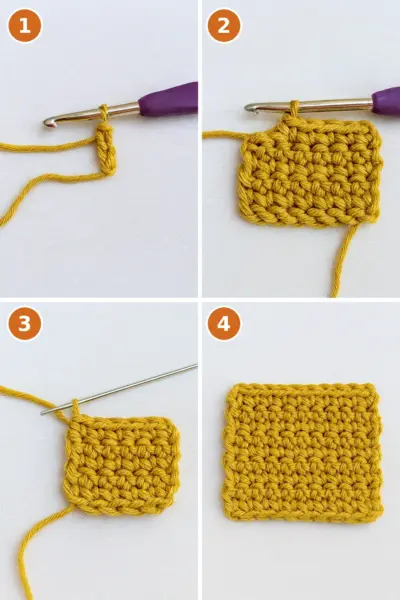
To practice, create a small swatch using a combination of these stitches. This will help you become familiar with tension and stitch formation. Aim for a swatch that measures about 6 inches by 6 inches to give yourself enough space to experiment with each stitch. Focus on the evenness of your stitches and the consistency of your tension as you work through the swatch. This practice will greatly enhance your comfort level with crochet techniques.
Tips for Success
- Tension: Pay attention to your tension. It should be consistent throughout your work. If your stitches are too tight, try loosening your grip on the yarn. If they are too loose, tighten your grip slightly.
- Counting Stitches: Always count your stitches at the end of each row or round. This will help you avoid mistakes and keep your project on track.
- Practice: The more you crochet, the better you will become. Don’t hesitate to practice each stitch multiple times until you feel comfortable with it. Remember, every crocheter started as a beginner, and practice is the key to improvement.
FAQ
1. What is the best yarn for beginners?
Medium-weight (worsted) yarn is great for beginners because it’s easy to work with.
2. How do I keep my tension consistent?
Practice regularly and be mindful of how tightly you hold your yarn and hook. It may help to check your tension frequently as you work.
3. Can I crochet with any hook size?
While you can use any size, starting with a medium-sized hook is recommended for beginners to ensure easier handling.
4. How do I fix mistakes while crocheting?
You can unravel your work by pulling the yarn back to the desired stitch or using a yarn needle to sew it back together. Learning to recognize and fix errors will enhance your crocheting skills.
Conclusion
Now that you know the basics of crochet, it’s time to put your skills to the test! Remember that practice is key. Don’t be afraid to make mistakes; every stitch is a step closer to mastering this beautiful craft. With dedication and patience, you will find joy in creating unique pieces. Happy crocheting!