Introduction
Crocheting is a wonderful and creative hobby that allows you to create beautiful items with just a hook and yarn. If you’re new to crochet, knowing the basic stitches is essential. This guide covers 6 beginner crochet stitches the basics you need to learn to help you start your journey.
What You Need to Start
Before you dive into learning these stitches, make sure you have the following:
– Yarn: Choose a medium weight (worsted) yarn for easier handling.
– Crochet Hook: A size I (5.5 mm) hook is usually a good choice for beginners.
– Scissors: To cut your yarn.
– Tapestry Needle: For weaving in ends.
– Measuring Tape: To check gauge if needed.
1. Chain Stitch (ch)
What It Is
The chain stitch is the foundation of most crochet projects. It creates a series of interlocking loops that serve as the starting point for many patterns.
How to Work It
- Make a slip knot on your hook.
- Yarn over and pull through the loop on your hook to create your first chain.
- Continue to yarn over and pull through the loop on your hook until you have the desired number of chains.
Common Uses
This stitch is commonly used to start most patterns and create edges for various projects.
Common Mistake
Avoid pulling the yarn too tightly, which can make it difficult to work into subsequent stitches. Keep a consistent tension for best results.
2. Single Crochet (sc)
What It Is
The single crochet stitch is a fundamental technique that creates a tight, dense fabric, making it ideal for various projects.
How to Work It
- Insert your hook into the stitch where you want to work.
- Yarn over and pull up a loop, leaving you with two loops on your hook.
- Yarn over again and pull through both loops on your hook to complete the stitch.
Common Uses
Single crochet is great for amigurumi, blankets, and many other crochet projects.
Common Mistake
Be careful not to skip stitches; counting your stitches accurately will help keep your work even and consistent.
3. Half Double Crochet (hdc)
What It Is
The half double crochet stitch is a versatile stitch that stands taller than a single crochet but shorter than a double crochet, providing a unique texture.
How to Work It
- Yarn over and insert your hook into the stitch.
- Yarn over again and pull up a loop, which results in three loops on your hook.
- Yarn over and pull through all three loops to finish the stitch.
Common Uses
This stitch is often used in textured fabrics and various crochet patterns, adding depth to your work.
Common Mistake
Pay attention to your tension; if your stitches are too tight, it can make it difficult to work into them later.
4. Double Crochet (dc)
What It Is
The double crochet stitch is a taller stitch that creates a more open fabric, perfect for airy designs.
How to Work It
- Yarn over and insert your hook into the stitch.
- Yarn over and pull up a loop, giving you three loops on your hook.
- Yarn over and pull through the first two loops, leaving you with two loops remaining.
- Yarn over again and pull through the last two loops to complete the stitch.
Common Uses
This stitch is ideal for shawls, blankets, and lacy patterns that require a bit more openness.
Common Mistake
Remember to yarn over before inserting your hook; this step is crucial for achieving the correct height of the stitch.
5. Slip Stitch (sl st)
What It Is
The slip stitch is a unique stitch used for joining or moving across stitches without adding any height, making it perfect for seams.
How to Work It
- Insert your hook into the stitch where you want to join.
- Yarn over and pull up a loop.
- Yarn over again and pull through both loops on the hook to finish the stitch.
Common Uses
This stitch is commonly used for joining rounds and creating seams in your projects, providing a neat finish.
Common Mistake
Ensure you’re inserting your hook into the correct stitch; doing so incorrectly can lead to uneven work.
6. Treble Crochet (tr)
What It Is
The treble crochet stitch is a taller stitch that adds a lovely drape to your fabric, making it suitable for many designs.
How to Work It
- Yarn over twice and insert your hook into the stitch.
- Yarn over and pull up a loop, leaving you with four loops on your hook.
- Yarn over and pull through the first two loops, leaving three loops remaining.
- Yarn over again and pull through the next two loops, resulting in two loops left.
- Finally, yarn over and pull through the last two loops to complete the stitch.
Common Uses
This stitch is perfect for lacy projects and for adding height to your work, creating beautiful patterns.
Common Mistake
Ensure you’re yarning over twice before inserting your hook; this is essential for achieving the correct height of the stitch.
Practice Swatch
To practice these stitches, create a small swatch:
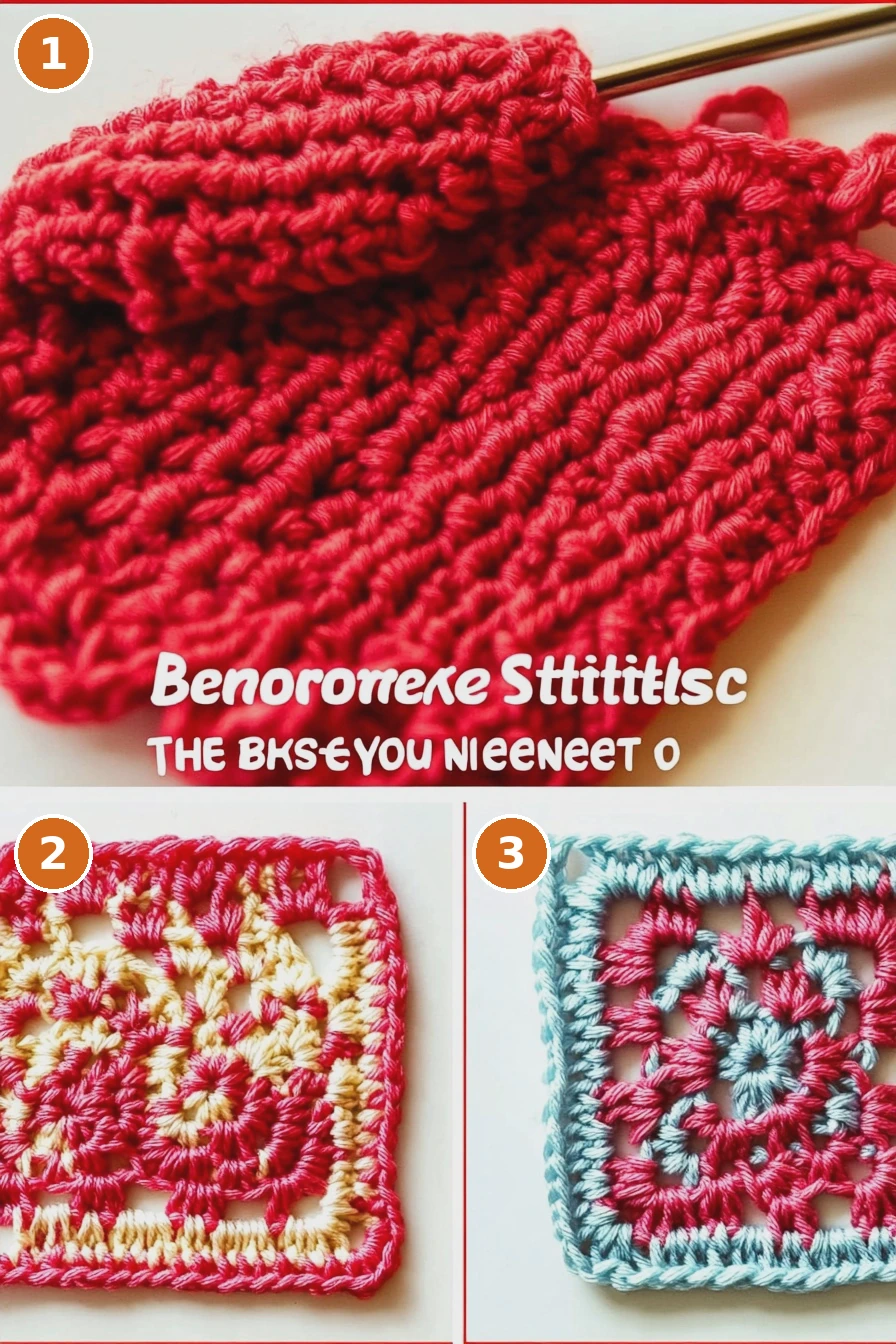
– Start with a chain of 20.
– Work a row of single crochet, then a row of half double crochet, followed by a row of double crochet, and continue experimenting with the remaining stitches. This will help you become comfortable with each stitch and understand how they look and feel in your work.
FAQ
1. How long does it take to learn these stitches?
Most beginners can learn the basic stitches in just a few hours of practice, depending on your pace and comfort level.
2. Can I use different yarn weights?
Yes, you can use different yarn weights, but starting with medium weight yarn is recommended for easier handling and better control.
3. What if I make a mistake?
Don’t worry! Crochet is a forgiving craft; you can always unravel your work and try again without any stress.
4. Do I need to learn all these stitches?
Learning these 6 beginner crochet stitches the basics you need to learn will provide you with a solid foundation for many projects, giving you the confidence to explore further.
5. Where can I find patterns using these stitches?
Many beginner-friendly patterns can be found online or in crochet books, offering a variety of projects to practice your new skills.
Conclusion
Learning these 6 beginner crochet stitches the basics you need to learn is a fantastic way to kick off your crochet journey. With consistent practice, patience, and a sprinkle of creativity, you’ll soon be able to tackle various projects with confidence and skill. Happy crocheting!